


For a certified candidate, transitional local pastor, or supply pastor walking the road toward ordained ministry, the cost of education can be one of the heaviest parts of the journey. This year, for the first time, the Great Lakes Annual Conference is able to make General Church scholarship funds available to help carry that weight. The Book of Doctrines and Discipline establishes these funds as the Ministerial Scholarship Fund, and the Great Lakes Annual Conference is opening the application process to its own candidates and pastors for the first time this fall. As with any new process, this year's approach reflects our best current understanding of how to administer these funds well, and we expect to refine it in the years ahead as we learn what serves our candidates best. Who may apply Any certified candidate, transitional local pastor, or supply pastor of the Great Lakes Annual Conference is eligible to apply. The application includes a general portion open to every applicant, along with an additional needs-based portion for those who feel they would qualify. Please note that submitting an application does not guarantee an award, nor does it guarantee a particular amount. Awards will be determined based on the funds available and the applications received. Timeline The application will remain open through Monday, November 30, 2026, the Monday following Thanksgiving, at noon ET. Looking ahead Alongside this year's General Church scholarships, work is already underway to build the Conference's own Candidate Training Endowment Fund through the Formed and Sent campaign. As that endowment grows, the Great Lakes Annual Conference will be able to offer scholarship support of its own, in addition to the funds made available through the General Church, further strengthening how we walk alongside those called and equipped for ministry. We are grateful for every candidate and pastor pursuing this call, and we're glad to offer this support as one more way of investing in the leaders God is forming for the future of the Great Lakes Annual Conference. Questions? Call our office at (463) 202-6032 or email info@greatlakesgmc.org.
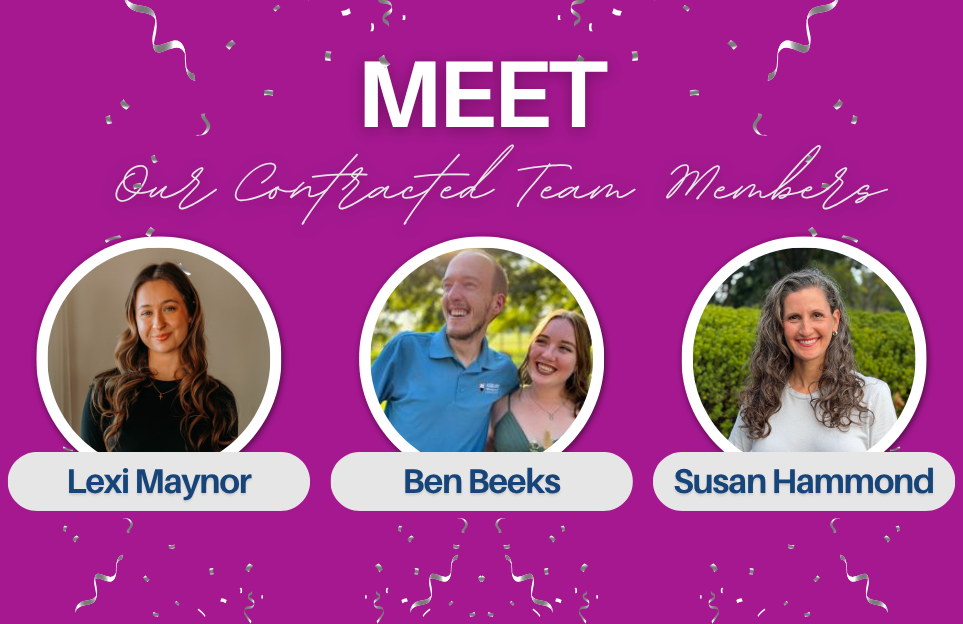
The Great Lakes Annual Conference is fortunate to work with a talented group of contracted team members who bring a wealth of experience and heart to their work. Get to know Lexi Maynor, Ben Beeks, and Susan Hammond below. Lexi Maynor - Equipping Assistant Lexi calls Virginia home, which is both where she's from and where she still resides today. Outside her work with the Great Lakes Annual Conference, Lexi stays busy supporting other pastors and churches with administrative help. She's also a full-time student working toward her degree, and she serves in youth ministry at her church. Ben Beeks - Events Manager Ben is a United Methodist pastor's kid through and through, which makes "Where are you from?" a bit of a loaded question for him. His shorthand answer is Osceola, Indiana, where his dad served as pastor at Osceola UMC from 1998 to 2006. These days, home is in flux in the best way. Ben and his family recently sold their home in Indianapolis and are currently living with his parents while they build a new home in Brownsburg, conveniently just four houses down from Mom and Dad. Beyond his work with the Great Lakes Annual Conference, Ben keeps a full plate. He's appointed to The Community Fellowship in Jamestown, Indiana, and also serves on staff at Wayfinders, a nonprofit dedicated to helping people activate their purpose by investing in and raising up everyday leaders and disciples. When he's not juggling his jobs, Ben treasures time with his wife, Emily, and daughter, Adelyn, a good game night with friends, or a quiet morning run. Susan Hammond - Communications & Development Assistant Susan grew up in Kentucky. Along the way, she served with her husband in ministry in Kentucky, Ohio, and then moved to Haiti to serve with her family for 10 years, before moving back to Kentucky. When she's not working with the Great Lakes Annual Conference, Susan serves as the Director of Mission Trips for a mission organization. In her free time, she's recently taken up cycling with her husband as a fun, new empty-nest activity. She also enjoys running with her daughters and settling in with a good book whenever she can find the time. Thank you, Ben, Lexi, and Susan, for the gifts and experience you bring to our team!

Some of the most important work of a General Conference happens quietly. While the election of bishops and other major moments may capture the attention of the Church, much of the ongoing work of the Global Methodist Church is carried forward by clergy and laity who serve through its councils, commissions, and committees. During the 2026 General Conference, delegates elected clergy and laity from across the connection to help guide the Church’s work for the 2026–2032 sexennium. Among those elected were several leaders from the Great Lakes region who will serve in these important roles. In this post, we’re highlighting the Great Lakes clergy and laity who were elected to serve and giving a brief look at the important work of the bodies to which they have been appointed. The Conferences Commission exists to support the strategic growth and organization of the Global Methodist Church around the world. It makes recommendations to the Assembly of Bishops, the Connectional Council, and the General Conference regarding the creation, restructuring, or modification of annual conferences — the regional bodies through which the Church carries out its work. Delegates elected six clergy and six laity, with no additional members to be added. Laity: Kirsten Mains The Ecumenical Relationships Commission strengthens the Church's ties with the broader body of Christ, bringing recommendations to the Assembly of Bishops and the Connectional Council concerning the denomination's participation in councils and networks of Christian bodies, as well as covenants or potential unions with other churches — the very work embodied this week in the covenant signed with the Korean Methodist Church. A bishop chairs the commission; delegates elected four clergy and four laity. Laity: Bridget Douglas The Finance, Administration, Pensions, and Benefits Commission exists to support faithful stewardship, integrity, and transparency at every level of the connection. Appointed by the General Conference and reporting to the Connectional Council, it provides financial oversight, legal support, and guidance in matters of retirement, benefits, and recordkeeping. Delegates elected ten members, with the Connectional Council able to add up to five more. Laity: Sherry Austin The Global Episcopacy Committee oversees the election of bishops, provides human-resources and administrative support for their ministry, and processes concerns in keeping with the Church's Judicial Practice and Procedures — the body that guided this week's historic episcopal elections. Its nominees were chosen by the Connectional Council, as prescribed by the “Book of Doctrines and Discipline,” and delegates elected six clergy and six laity, each by a sixty-percent vote. Clergy: Chris Ritter
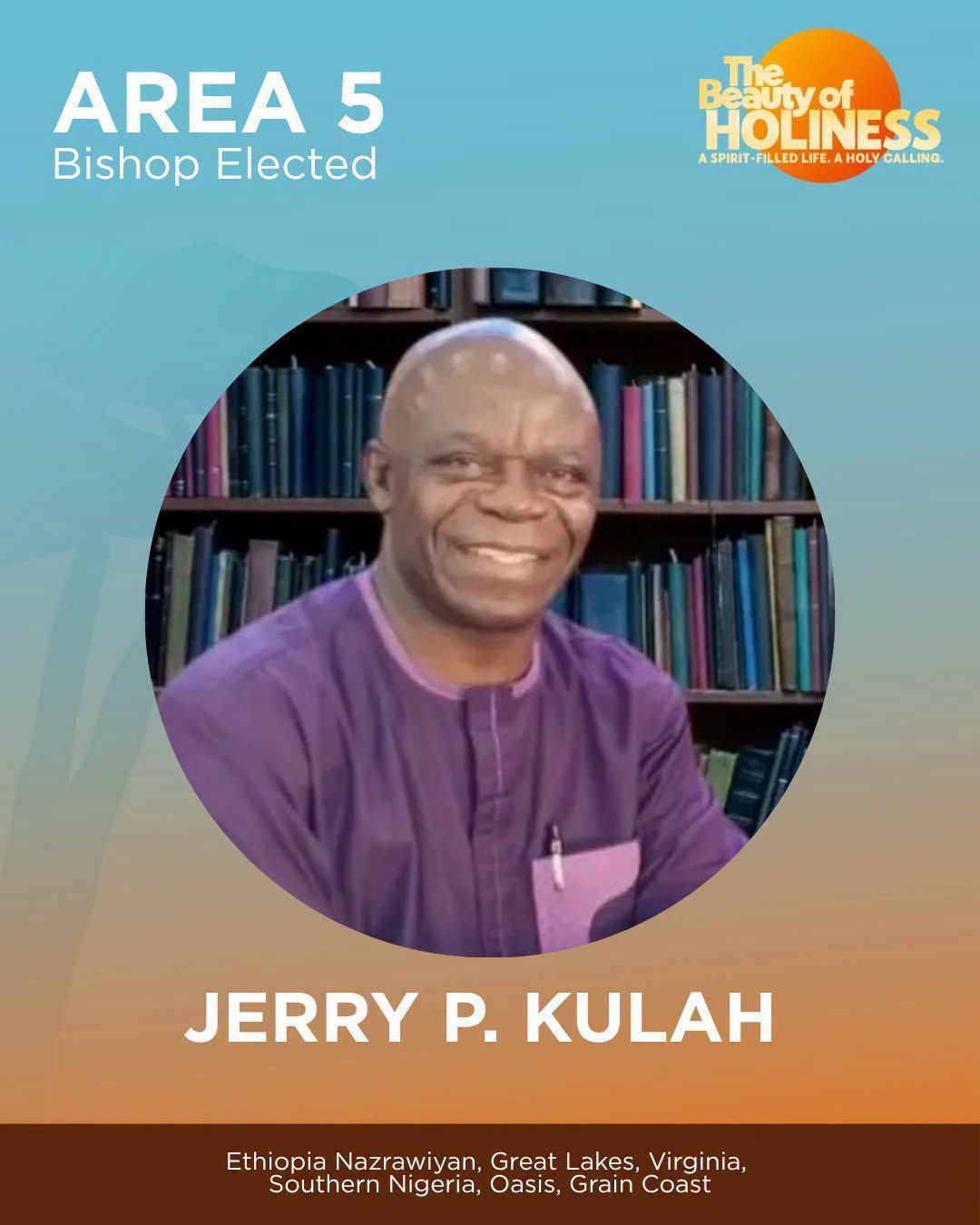
Great Lakes Annual Conference Welcomes Bishop Jerry Kulah We are pleased to welcome Rev. Dr. Jerry Kulah, who has been elected to serve as bishop of Episcopal Area 5, which includes the Great Lakes Annual Conference. Bishop Kulah is from Liberia, West Africa, where he came to personal faith in Christ in 1977 and was discipled through the ministries of Youth for Christ and the Great Commission Movement. He is married to Ruth Chea Kulah, and together they have four children. Dr. Kulah holds a Doctor of Ministry in Leadership from Asbury Theological Seminary and is a PhD candidate in Contextual Theology, with an emphasis in Discipleship, at Anglia Ruskin University in the United Kingdom. An evangelist, pastor, teacher, and administrator, Dr. Kulah brings nearly three decades of full-time ministry experience. He currently serves as Conference Superintendent of the Grain Coast Conference. Throughout his ministry, he has served the church in a variety of leadership roles, including pastor, Director of Evangelism and Missions, District Superintendent, professor of Biblical and Theological Studies, Dean, and Vice President of the United Methodist University in Liberia. Dr. Kulah is also an accomplished writer, international speaker, and conference facilitator. He has served in leadership and speaking roles at gatherings across the United States. The newly elected bishops will begin serving their episcopal areas in November. As Bishop Kulah prepares to begin his ministry among us, we give thanks for his leadership and experience and look forward to welcoming him to the Great Lakes Annual Conference. We invite our entire Great Lakes connection to pray for Bishop Kulah and his family as they prepare for this new season of ministry, and to join us in extending a warm welcome when he begins his service among us in November.
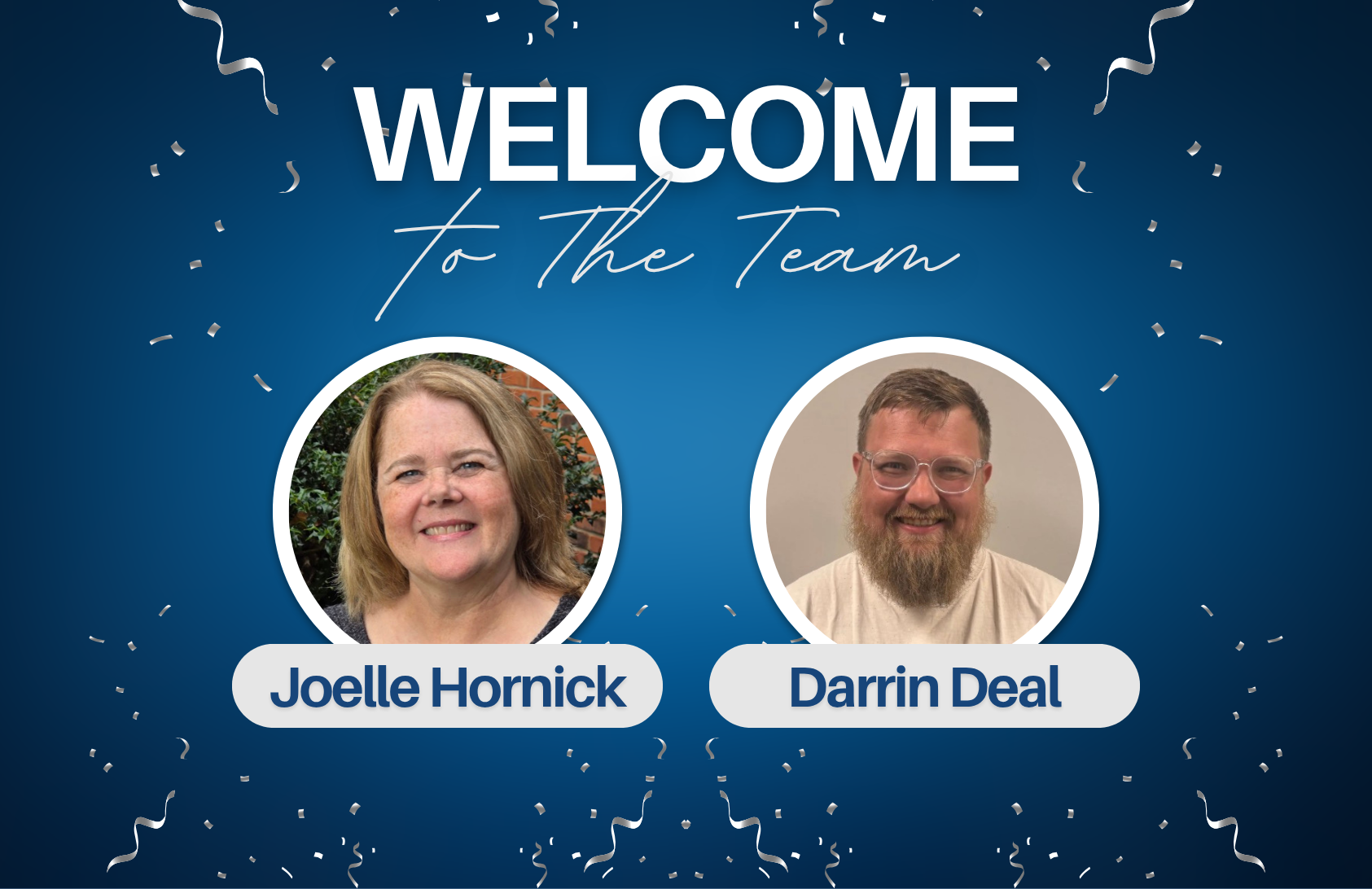
Welcome to the Team: Meet Joelle & Darrin Great Lakes Annual Conference is growing, and we are grateful to welcome two new members to our staff who will help us serve the people and churches across the Great Lakes Annual Conference. Joelle Hornick joins the team as our Administrative Assistant, bringing a heart for people and a passion for serving those who serve the church. Darrin Deal joins us as our part-time IT Specialist, bringing technical experience and a desire to use those skills to strengthen the work of ministry. Meet Joelle - Administrative Assistant Joelle knows a thing or two about serving behind the scenes. Originally from Camden, Indiana, she now lives in Ramsey, Indiana, with her husband, Joe, who is a Global Methodist pastor, and their four children. That experience of being close to the work of ministry has shaped the way Joelle sees her new role. “I love helping people who are doing the hard, holy work of ministry,” Joelle says. “My heart is to be a behind-the-scenes helper, a ‘hero maker,’ for the leaders, pastors, and servants who are out there every day loving on their communities and pointing people to Jesus.” That “hero maker” mindset is a fitting description of what Joelle brings to the conference staff. Her role may happen largely behind the scenes, but the people she serves are doing ministry on the front lines every day. Conference Superintendent Rev. Dr. Scott Pattison is grateful to have her on the team. “Joelle has a genuine gift for helping and a steady presence behind the scenes,” said Scott. “She loves connecting with people and pointing them toward what they need. We are grateful God has led her to serve the Great Lakes Annual Conference in this way.” Meet Darrin - IT Specialist For Darrin, technology is not really about technology. It is about what technology makes possible. Originally from Southern Indiana, Darrin now lives in Indianapolis and also works at The Compass Church in Selma, Indiana. He is excited to bring his technical experience to the conference and help create systems and solutions that allow ministry leaders to focus on what matters most. “As I support the conference with tech solutions, I enable the work of ministry to be done in our communities,” said Darrin. That perspective is exactly what Rev. Kara Bussabarger, Director of Equipping, sees Darrin bringing to the role. “Darrin believes that when technology works smoothly, leaders are freed up to shepherd people well,” said Kara. “That is the kind of support we want to provide across the Great Lakes Conference, and we are excited to have Darrin here to help make that happen. He has a gift for turning problems into solutions and the complicated into clarity, and we are thrilled to have him on the team.” After a thoughtful search process, we are excited to welcome Joelle and Darrin to the Great Lakes team. We are thankful for the gifts, experience, and heart they will bring to the Great Lakes Annual Conference!
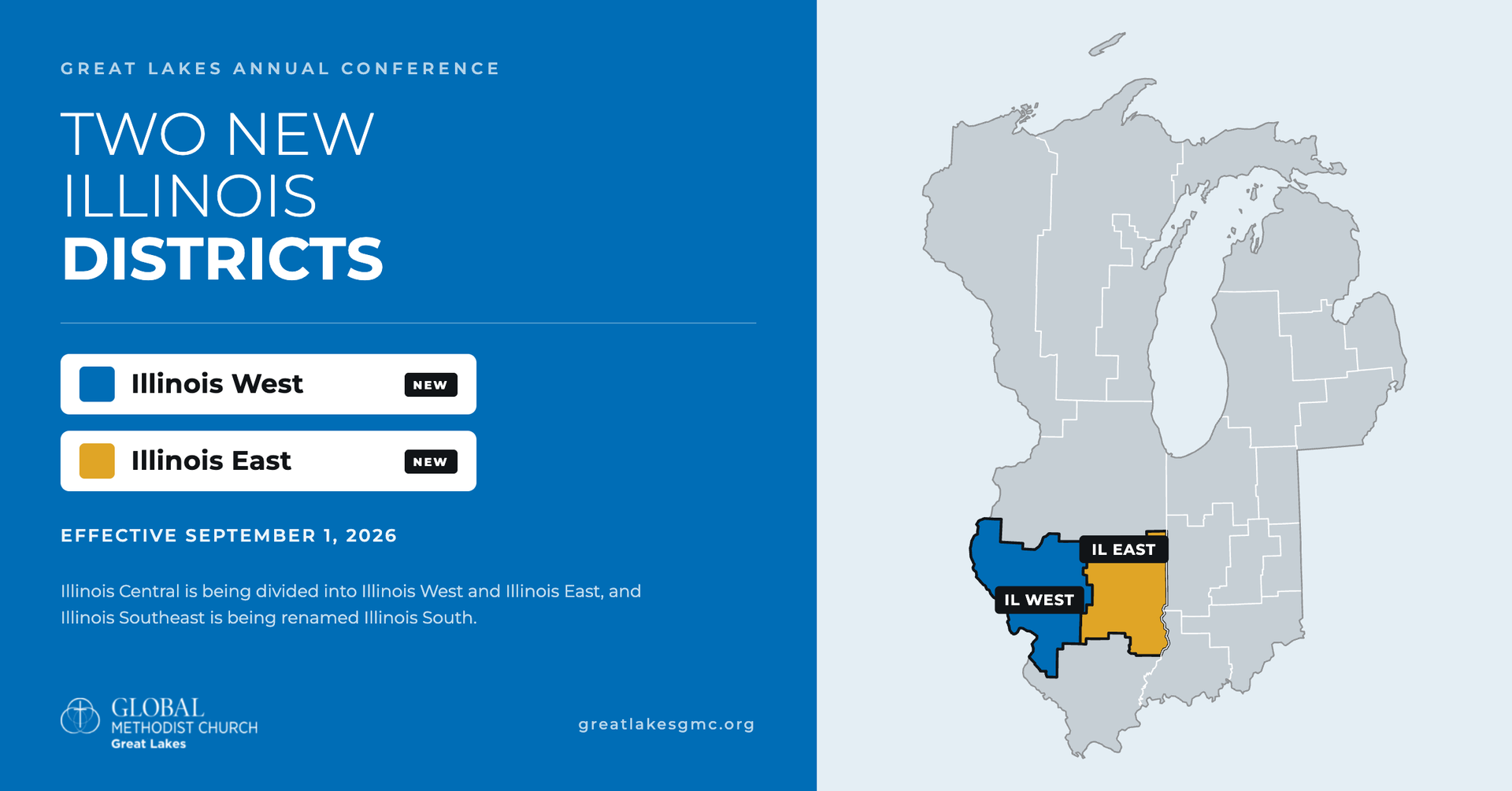
The Great Lakes Annual Conference is pleased to announce the addition of one new district and a change in district lines, effective September 1, 2026. On the recommendation of the Cabinet, the Conference Connectional Council approved this transition in response to the encouraging growth God is bringing to the Global Methodist Church across central Illinois. The plan creates a new Illinois East District, renames the Illinois Central District the Illinois West District, and makes the Illinois Southeast District the Illinois South District. Please make careful note of these changes as work on charge conference submissions begins. Dr. Arun Paul will join the Cabinet, serving the Illinois East District as Presiding Elder. Rev. Jon Carrell will continue as Presiding Elder and will shift to overseeing the Illinois West District. All other district lines and Presiding Elder appointments remain the same. "I am very thankful for the care and leadership Jon has given to the churches and leaders of the Illinois Central District," said Conference Superintendent Scott Pattison. "We are excited about the many new churches in this area that have come online within the last year to become part of our movement, and I know Arun will do a fantastic job as he begins to serve." Rev. Stan Pegram, Interim Dean of Cabinet, noted: "We believe this shift will allow churches to stay closely connected and well supported, keeping each district at a size where healthy relationships and care can thrive." The churches in each of the new districts are listed below. Illinois West Sherman; Bissell (Springfield); Rockbridge; Greenfield; Hillsboro; Irving; Coffeen; Fillmore; Gillespie; Staunton; Dorchester; Mt. Olive; Sorento; Troy; Worden; New Athens Illinois East Waynesville; Decatur Grace; Champaign New Horizon; Faith Beyond Madison (Westfield); Zion Hill Church in Paradise; Marshall; Pearl Chapel; Olney; Zion Country Any questions regarding this new shift can be directed to Rev. Stan Pegram, Interim Dean of Cabinet, at stan.pegram@greatlakesgmc.org or the Presiding Elder of the respective districts.

Do you know someone who may be called to become a Certified Lay Minister (CLM) in the Global Methodist Church? Enrollment is now open for 2026 CLM courses. We encourage you to share this opportunity with potential CLMs in your congregation or district and invite them to explore this next step in ministry. How to Register: Click the link below to view the full list of Fall 2026 courses and registration information. To reserve your spot, complete your registration no later than two weeks before the start date of your selected class. Important Dates: Registration Deadline: Two weeks before each class begins. After the registration deadline, instructors will contact registered students with course details and additional information. If a class reaches capacity, a waitlist will be available. Participants on the waitlist will be notified if a space becomes available.

The Great Lakes Annual Conference is growing, and we're excited to invite passionate, Kingdom-minded individuals to join our team! We are currently seeking a part-time IT Specialist and a full-time Administrative Assistant. These are two important roles that will help strengthen the daily ministry and operations of the conference. If you have a heart for serving others, enjoy working collaboratively, and want to use your gifts to support the mission of the Church (or someone who does), we'd love to hear from you. Explore the opportunities below to learn more. Two New Roles: 1. Administrative Assistant (Full-Time, Remote or In-Person) The Great Lakes Annual Conference is seeking a warm, organized, and service-oriented Administrative Assistant to support the Conference Superintendent and serve as a welcoming point of contact for the conference. This full-time, hybrid position includes managing schedules and communications, coordinating meetings and events, answering inquiries, and providing administrative support to help the conference operate efficiently. The ideal candidate is highly organized, communicates with professionalism and hospitality, handles confidential information with discretion, and enjoys serving others in a ministry-focused environment. Key Responsibilities: Provide administrative and scheduling support to the Conference Superintendent. Manage calendars, meetings, and event requests. Serve as the first point of contact by answering phones and responding to general inquiries. Coordinate conference communications and route requests to the appropriate staff. Maintain accurate conference calendars and assist with office operations. Provide exceptional hospitality while handling confidential information with discretion. Full Administrative Assistant Job Description 2. IT Specialist (Part-Time, Remote) Help keep the Great Lakes Annual Conference connected and running smoothly! We're seeking a service-minded IT Support Specialist to provide technical support, manage our digital platforms, maintain our website and databases, administer Google Workspace, and create training resources that empower staff and church leaders to use technology with confidence. This hybrid, part-time position (approximately 25 hours per week) is ideal for someone with strong troubleshooting skills, experience with cloud-based tools, and a passion for serving others through technology. Key Responsibilities: Maintain conference databases, online forms, and digital platforms. Administer Google Workspace and support Microsoft Office users. Update and maintain the conference website and mobile app. Provide friendly technical support and troubleshoot IT issues. Create training videos, guides, and other technology resources. Support conference communication tools and secure file sharing. We are excited to share these two new opportunities to join the Great Lakes Annual Conference team. If you are passionate about serving others, strengthening ministry, and supporting the work of the church through your skills, we invite you to explore these roles and consider applying using the link below. In addition to the application, a leadership discovery assessment is required to complete your submission. Full IT Specialist Job Description DEADLINE TO APPLY IS FRIDAY, JULY 17, 2026, AT NOON ET. Questions? Contact us at info@greatlakesgmc.org or (463) 202-6032.
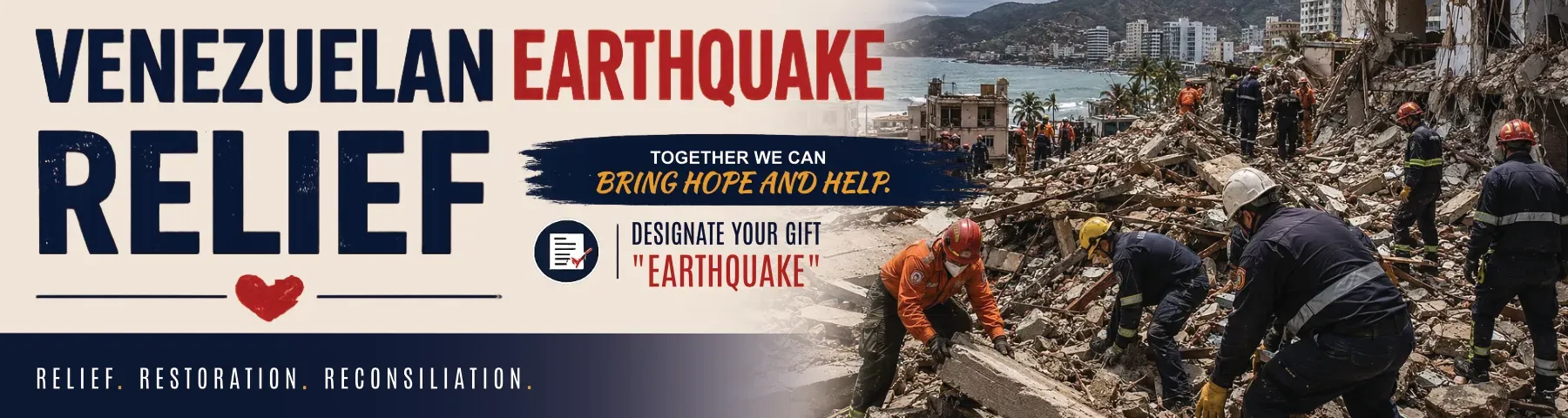
Our brothers and sisters in Venezuela are reeling. On June 24, a powerful pair of earthquakes — a magnitude 7.2 foreshock followed seconds later by a 7.5 mainshock — struck the country, collapsing buildings and leaving hundreds dead and thousands injured. The need is immediate, and many in our churches are asking the same question: how can we help? If your church already has a trusted avenue for giving, wonderful — please use it. But if you're looking for a way to come alongside this relief effort, we want to point you to Venezuela Now, Inc., an approved Global Methodist Church partner headquartered in North Georgia that has served in Venezuela for years. They are working hand in hand with GM Church leadership on the ground, and they are already moving to get help into the hardest-hit areas. We can verify their work and trust their stewardship. Sometimes we want to help and simply don't know where to start. This is a resource you can lean on with confidence. To give, visit VenezuelaNow.org and designate your gift "EARTHQUAKE" so it goes directly to this response. Would you join us in praying for the people of Venezuela, and in supporting those who are walking alongside them? Together we can bring hope and help — and be the hands and feet of Jesus.
KINGDOM ADVANCEMENT TRAINING COMING TO GREAT LAKES CONFERENCE - SEPT 22-24, 2026 PATHFINDER CHURCH – PORTAGE, MI Equip your churches to carry out the mission of Jesus. ENGAGE is a two-day interactive training in the best practices for Acts 1:8 local & global missions. Sponsored by the GMC Kingdom Advancement Commission, ENGAGE provides a unique opportunity to equip, connect, and empower local churches, and strengthen our collective witness. Through ENGAGE, local churches and annual conference leadership will be equipped in the foundations of effective missional outreach as we pursue our mission to make disciples of Jesus Christ and spread Scriptural holiness across the globe. Registration $25.00 (Includes dinner Tuesday and lunch Wednesday and snacks) Schedule: Tuesday: 4pm - Welcome; 5pm - Dinner, followed by opening worship Wednesday: 9am - 5:30pm Thursday: 9am- noon Hotel suggestions : Delta Hotels, 711 Washington Ave., Kalamazoo, MI Staybridge Suites, 9575 South 27th Street, Kalamazoo, MI This training is for: Conference Superintendents Connectional Officers and Presiding Elders AC Mission Committee leaders & members Pastors and local church mission leaders What does ENGAGE include? An introduction to “GMC Missions”: Identifying Biblical Foundations of Missions Equipping participants to share God’s Story, and their own ‘Rescue Story’ Structuring for Mission Mobilization Building Healthy Partnerships Understanding the roles of annual conference and local church mission leaders There will be opportunities to discuss how churches and conferences are engaging in mission, discuss challenges, and share best practices. We will come together in praise, worship, and intercessory prayer. Additional tools and resources: Learn about the process of becoming an Acts 1:8 church Access the GMC Kingdom Advancement portal for tools to equip leaders in evangelism, disciple-making, missional engagement, and prayer for the nations; discover how your churches can connect with proven Strategic Partners and the GMC online multi-language Resource Library. The Engage event provides a ‘train-the-trainer’ experience for participants. Participant-leaders, “take back” what you learn; share it within your annual conference, districts, and local congregations.